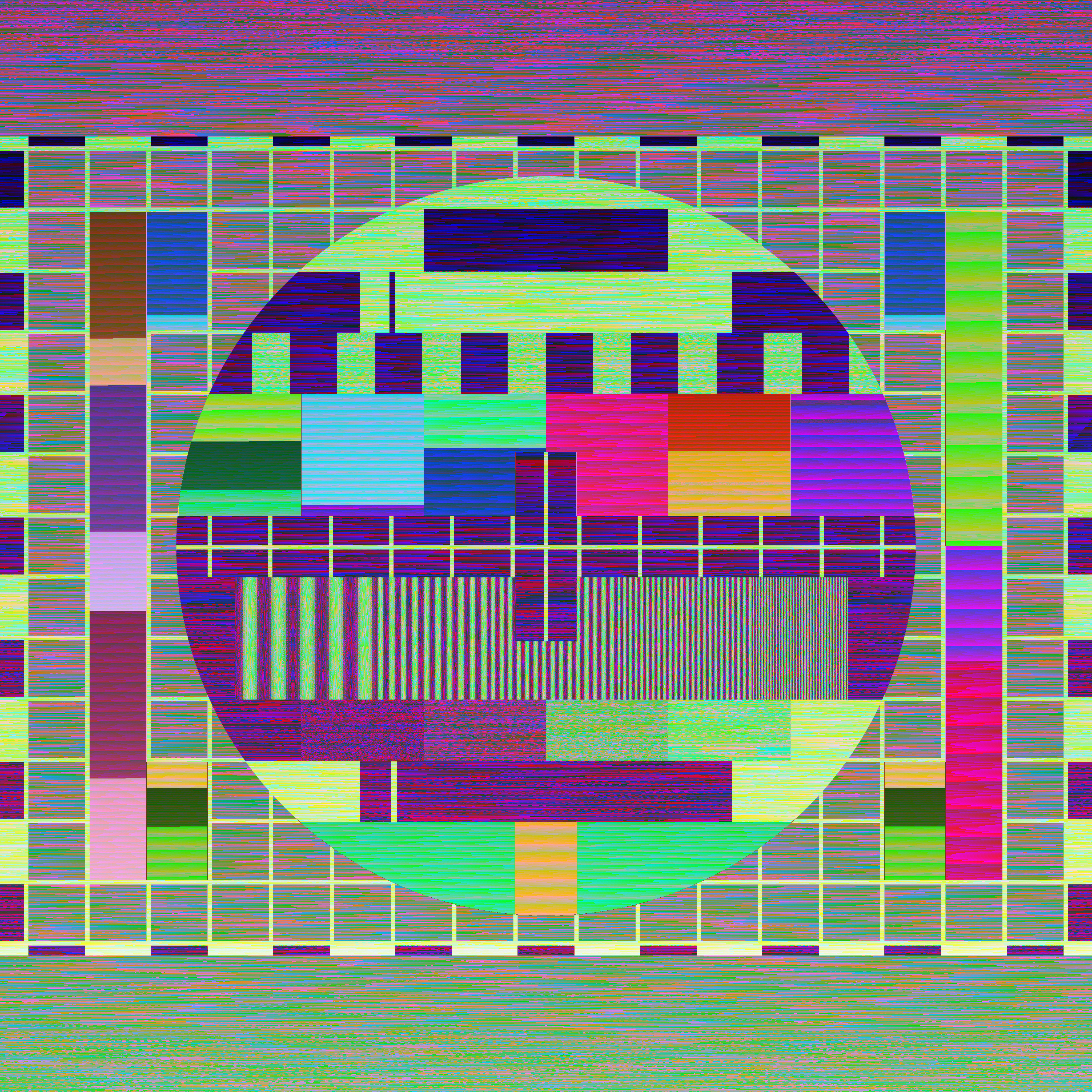
#!/usr/bin/env python3
# -*- coding: utf-8 -*-

"""
AllRGB Philips PM5544 generator (SVG + pooled color mapping)
------------------------------------------------------------

This script:

1. Loads a reference PM5544 image, which may be:
   - An SVG file (vector, via CairoSVG), or
   - A raster file (PNG/JPEG/etc., via Pillow).
2. Rasterizes (if SVG) and resizes it to fit inside a 4096×4096 square while
   preserving aspect ratio. The pattern is centered on a mid-grey background.
3. Treats the resulting 4096×4096 pixels as "target" colors.
4. Enumerates all 24-bit colors (0x000000 .. 0xFFFFFF).
5. Builds color "pools" for both targets and palette, based on luma and
   saturation (dark/mid/light greys, moderate colors, vivid colors).
6. Within each pool, assigns colors so that:
   - grey pools are mapped along luma gradients (good ramps and gray planes),
   - color pools are mapped by hue sector + luma (bars, patches and colored
     details get vivid colors of similar hue).
7. Writes out the resulting 4096×4096 image and verifies that every 24-bit
   color is used exactly once (permutation + XOR + channel sums).
"""

import io
import os
import time

import numpy as np
from PIL import Image


# ---------------------------------------------------------------------
# Configuration
# ---------------------------------------------------------------------
W = H = 4096
TOTAL_PIXELS = W * H
TOTAL_COLORS = 1 << 24  # 16,777,216

assert TOTAL_PIXELS == TOTAL_COLORS, "Canvas must have exactly 2^24 pixels."

# Path to your reference PM5544 image (SVG recommended).
REF_PATH = "pm5544.svg"   # <-- change this to your SVG/PNG path


# ---------------------------------------------------------------------
# Basic helpers
# ---------------------------------------------------------------------
def xor_0_to_n_minus_1(n: int) -> int:
    """XOR of integers 0..n-1 (closed form)."""
    m = n - 1
    r = m % 4
    if r == 0:
        return m
    elif r == 1:
        return 1
    elif r == 2:
        return m + 1
    else:
        return 0


def luma709_u8(r: np.ndarray, g: np.ndarray, b: np.ndarray) -> np.ndarray:
    """
    Approximate Rec.709 luma in 0..255 using integer math:

        Y ≈ (54*R + 183*G + 19*B + 128) >> 8
    """
    y = (54 * r.astype(np.uint32) +
         183 * g.astype(np.uint32) +
         19 * b.astype(np.uint32) + 128) >> 8
    return y.astype(np.uint16)


def hsv_sector(r: np.ndarray, g: np.ndarray, b: np.ndarray,
               s: np.ndarray) -> np.ndarray:
    """
    Rough HSV hue sector: 0=R,1=Y,2=G,3=C,4=B,5=M.

    Only meaningful when saturation s>0, but fine for global array.
    """
    r8 = r.astype(np.float32)
    g8 = g.astype(np.float32)
    b8 = b.astype(np.float32)

    maxi = np.maximum(np.maximum(r8, g8), b8)
    mini = np.minimum(np.minimum(r8, g8), b8)
    d = maxi - mini

    hue = np.zeros_like(maxi, dtype=np.float32)
    mr = (r8 >= g8) & (r8 >= b8)
    mg = (g8 > r8) & (g8 >= b8)
    mb = ~(mr | mg)

    idx = mr & (d > 0)
    hue[idx] = (60.0 * ((g8[idx] - b8[idx]) / d[idx]) + 360.0) % 360.0

    idx = mg & (d > 0)
    hue[idx] = 60.0 * ((b8[idx] - r8[idx]) / d[idx] + 2.0)

    idx = mb & (d > 0)
    hue[idx] = 60.0 * ((r8[idx] - g8[idx]) / d[idx] + 4.0)

    sec = np.floor(hue / 60.0).astype(np.int16) % 6
    return sec.astype(np.int8)


# ---------------------------------------------------------------------
# Reference image loading (SVG or raster)
# ---------------------------------------------------------------------
def load_reference_image(ref_path: str) -> Image.Image:
    """
    Load the reference image as a Pillow RGB image.

    - If ref_path ends with ".svg" (case-insensitive), use CairoSVG to
      rasterize the SVG to PNG bytes at high resolution, then load via Pillow.
    - Otherwise, open directly with Pillow and convert to RGB.
    """
    ext = os.path.splitext(ref_path)[1].lower()

    if ext == ".svg":
        import cairosvg

        with open(ref_path, "rb") as f:
            svg_bytes = f.read()

        # Render at least W wide; height will follow aspect.
        png_bytes = cairosvg.svg2png(bytestring=svg_bytes, output_width=W)
        img = Image.open(io.BytesIO(png_bytes)).convert("RGB")
    else:
        img = Image.open(ref_path).convert("RGB")

    return img


def load_reference_target(ref_path: str) -> np.ndarray:
    """
    Load the reference PM5544 image (SVG or raster), resize to fit inside
    4096×4096 while preserving aspect ratio, center on mid-grey, and return
    a flattened (N,3) uint8 array of target colors.
    """
    img = load_reference_image(ref_path)
    rw, rh = img.size

    # Scale to fit inside 4096×4096 preserving aspect ratio
    scale = min(W / rw, H / rh)
    new_w = int(round(rw * scale))
    new_h = int(round(rh * scale))

    # High-quality resample
    try:
        resample = Image.Resampling.LANCZOS
    except AttributeError:
        resample = Image.LANCZOS

    img_resized = img.resize((new_w, new_h), resample)

    # Start with mid-grey background
    canvas = np.full((H, W, 3), 128, dtype=np.uint8)

    # Center the resized pattern on the canvas
    ox = (W - new_w) // 2
    oy = (H - new_h) // 2
    arr_resized = np.asarray(img_resized, dtype=np.uint8)
    canvas[oy:oy + new_h, ox:ox + new_w, :] = arr_resized

    # Flatten to (N,3)
    target = canvas.reshape(-1, 3)
    assert target.shape == (TOTAL_PIXELS, 3)
    return target


# ---------------------------------------------------------------------
# Palette features and pooled assignment
# ---------------------------------------------------------------------
def build_palette_features() -> tuple[np.ndarray, np.ndarray, np.ndarray, np.ndarray]:
    """
    Enumerate all 24-bit RGB colors and compute features:

        c    : 24-bit color as uint32 (0xRRGGBB)
        Y    : luma 0..255 (uint16)
        S    : saturation 0..255 (uint8)
        SEC  : hue sector 0..5 (int8)
    """
    N = TOTAL_COLORS
    c = np.arange(N, dtype=np.uint32)

    R = ((c >> 16) & 0xFF).astype(np.uint8)
    G = ((c >> 8) & 0xFF).astype(np.uint8)
    B = (c & 0xFF).astype(np.uint8)

    Y = luma709_u8(R, G, B)

    maxc = np.maximum(np.maximum(R, G), B)
    minc = np.minimum(np.minimum(R, G), B)
    S = (maxc.astype(np.int16) - minc.astype(np.int16)).astype(np.uint8)

    SEC = hsv_sector(R, G, B, S)

    # We don't keep R,G,B to save memory; we only need c, Y, S, SEC.
    return c, Y, S, SEC


def assign_colors_pooled(target: np.ndarray,
                         palette_features: tuple[np.ndarray, np.ndarray,
                                                 np.ndarray, np.ndarray]
                         ) -> np.ndarray:
    """
    Core "pooling" assignment:

    - Compute Y (luma), S (saturation), SEC (hue sector) for target pixels.
    - Classify both target and palette colors into 5 bands:
        0 = dark grey       (low S, low Y)
        1 = mid grey        (low S, mid Y)
        2 = light grey      (low S, high Y)
        3 = moderate colors (medium S)
        4 = vivid colors    (high S)
    - For each band b in [0,1,2,4,3]:
        * gather all target pixels in band b,
        * gather all unused palette colors in band b (or borrow from others),
        * inside band:
            - for grey bands 0..2:  sort target & palette by Y and match
            - for color bands 3,4:  sort by (SEC, Y) and match
    - Returns assigned_color: array of 24-bit color integers (0xRRGGBB),
      length N, such that each palette color is used exactly once.
    """
    N = target.shape[0]
    assert N == TOTAL_COLORS

    c, Yp, Sp, SECp = palette_features

    # Features for target
    Rt = target[:, 0].astype(np.uint8)
    Gt = target[:, 1].astype(np.uint8)
    Bt = target[:, 2].astype(np.uint8)

    Yt = luma709_u8(Rt, Gt, Bt)
    maxc_t = np.maximum(np.maximum(Rt, Gt), Bt)
    minc_t = np.minimum(np.minimum(Rt, Gt), Bt)
    St = (maxc_t.astype(np.int16) - minc_t.astype(np.int16)).astype(np.uint8)
    SECt = hsv_sector(Rt, Gt, Bt, St)

    # Band thresholds
    S_GRAY = 25   # how "grey" is "grey"
    Y_MID1 = 85   # dark -> mid
    Y_MID2 = 170  # mid -> light

    # Classify target into 5 bands
    band_t = np.empty(N, dtype=np.int8)
    grey_mask = St <= S_GRAY
    band_t[grey_mask & (Yt < Y_MID1)] = 0
    band_t[grey_mask & (Yt >= Y_MID1) & (Yt < Y_MID2)] = 1
    band_t[grey_mask & (Yt >= Y_MID2)] = 2
    color_mask = ~grey_mask
    band_t[color_mask & (St < 128)] = 3
    band_t[color_mask & (St >= 128)] = 4

    # Same classification for palette
    band_p = np.empty(N, dtype=np.int8)
    grey_mask_p = Sp <= S_GRAY
    band_p[grey_mask_p & (Yp < Y_MID1)] = 0
    band_p[grey_mask_p & (Yp >= Y_MID1) & (Yp < Y_MID2)] = 1
    band_p[grey_mask_p & (Yp >= Y_MID2)] = 2
    color_mask_p = ~grey_mask_p
    band_p[color_mask_p & (Sp < 128)] = 3
    band_p[color_mask_p & (Sp >= 128)] = 4

    used = np.zeros(N, dtype=bool)
    assigned_color = np.empty(N, dtype=np.uint32)

    # We'll process bands in this order:
    #  - greys first (they're the most visually sensitive),
    #  - then vivid colors,
    #  - then moderate colors.
    band_order = [0, 1, 2, 4, 3]

    # Precompute keys for palette (once)
    key_p_gray = Yp.astype(np.int32)
    key_p_color = (SECp.astype(np.int16) * 256 + Yp.astype(np.int16)).astype(np.int32)

    for b in band_order:
        tidx = np.flatnonzero(band_t == b)
        n_t = tidx.size
        if n_t == 0:
            continue

        cand = np.flatnonzero((~used) & (band_p == b))
        n_c = cand.size

        if b in (0, 1, 2):
            key_t = Yt.astype(np.int32)
            key_p = key_p_gray
        else:
            key_t = (SECt.astype(np.int16) * 256 + Yt.astype(np.int16)).astype(np.int32)
            key_p = key_p_color

        if n_c >= n_t:
            # Enough palette colors of this band.
            pal_all = cand
            t_sorted = tidx[np.argsort(key_t[tidx], kind="stable")]
            p_sorted = pal_all[np.argsort(key_p[pal_all], kind="stable")][:n_t]
        else:
            # Not enough colors in this band; borrow from others by key-proximity.
            pal_list = []
            if n_c > 0:
                pal_list.append(cand)
            remaining = n_t - n_c

            all_unused_other = np.flatnonzero(~used & (band_p != b))
            if remaining > all_unused_other.size:
                raise RuntimeError("Not enough palette colors remaining (should not happen).")

            # Pick additional colors whose key is closest to the band’s mean key.
            mean_key = int(key_t[tidx].mean())
            dist = np.abs(key_p[all_unused_other] - mean_key)
            extra = all_unused_other[np.argpartition(dist, remaining - 1)[:remaining]]
            pal_list.append(extra)

            pal_all = np.concatenate(pal_list)

            # Order within band
            t_sorted = tidx[np.argsort(key_t[tidx], kind="stable")]
            p_sorted = pal_all[np.argsort(key_p[pal_all], kind="stable")]

        assert p_sorted.size == n_t
        used[p_sorted] = True
        assigned_color[t_sorted] = c[p_sorted]

    assert used.all(), "Some palette colors were not used."
    return assigned_color


def build_allrgb_from_target(target: np.ndarray) -> Image.Image:
    """
    High-level: build AllRGB image from target colors using pooled mapping.
    """
    print("  Building palette features...")
    palette_features = build_palette_features()

    print("  Assigning 24-bit colors with pooled mapping...")
    assigned = assign_colors_pooled(target, palette_features)

    # Unpack 24-bit colors 0xRRGGBB into RGB image
    R = ((assigned >> 16) & 0xFF).astype(np.uint8)
    G = ((assigned >> 8) & 0xFF).astype(np.uint8)
    B = (assigned & 0xFF).astype(np.uint8)
    img_arr = np.stack([R, G, B], axis=1).reshape(H, W, 3)
    img = Image.fromarray(img_arr, mode="RGB")
    return img


# ---------------------------------------------------------------------
# Verification
# ---------------------------------------------------------------------
def verify_allrgb(img: Image.Image):
    """
    Verify:
      - XOR of all pixel values equals XOR of 0..(2^24-1).
      - Per-channel sums match the theoretical sums for all 24-bit colors.
    """
    arr = np.asarray(img, dtype=np.uint8).reshape(-1, 3)
    packed = (arr[:, 0].astype(np.uint32) << 16) | \
             (arr[:, 1].astype(np.uint32) << 8) | \
             arr[:, 2].astype(np.uint32)

    print("  Verifying XOR coverage...")
    xor_img = np.bitwise_xor.reduce(packed)
    xor_ref = xor_0_to_n_minus_1(TOTAL_COLORS)
    assert xor_img == xor_ref, "XOR coverage check failed."

    print("  Verifying per-channel sums...")
    # Each channel: every value 0..255 appears exactly 256^2 times.
    REPEAT = 256 * 256
    sum_0_255 = (255 * 256) // 2  # sum(range(256))
    exp_sum = REPEAT * sum_0_255
    sums = arr.sum(axis=0)
    assert int(sums[0]) == exp_sum and int(sums[1]) == exp_sum and int(sums[2]) == exp_sum, \
        "Channel sum check failed."

    print("  Verification passed: perfect 24-bit coverage.")


# ---------------------------------------------------------------------
# Main
# ---------------------------------------------------------------------
def main(ref_path: str = REF_PATH, out_path: str = None):
    t0 = time.time()
    print(f"Target resolution: {W}×{H} pixels ({TOTAL_PIXELS:,} total)")
    print(f"Reference file   : {ref_path}")

    print("Loading and preparing reference PM5544 image (SVG/PNG)...")
    target = load_reference_target(ref_path)

    print("Building AllRGB image from reference with pooled color mapping...")
    img = build_allrgb_from_target(target)

    print("Running coverage verification...")
    verify_allrgb(img)

    if out_path is None:
        from datetime import datetime
        ts = datetime.now().strftime("%Y%m%d-%H%M%S")
        ext = os.path.splitext(ref_path)[1].lower().lstrip(".")
        out_path = f"allrgb_pm5544_pooled_from_{ext}_{W}x{H}_{ts}.png"

    print(f"Saving: {out_path}")
    img.save(out_path, optimize=True)

    dt = time.time() - t0
    print(f"Done in {dt:.1f} seconds.")


if __name__ == "__main__":
    np.set_printoptions(suppress=True)
    main()